Top Signs You Need Gutter Repair in Hackettstown

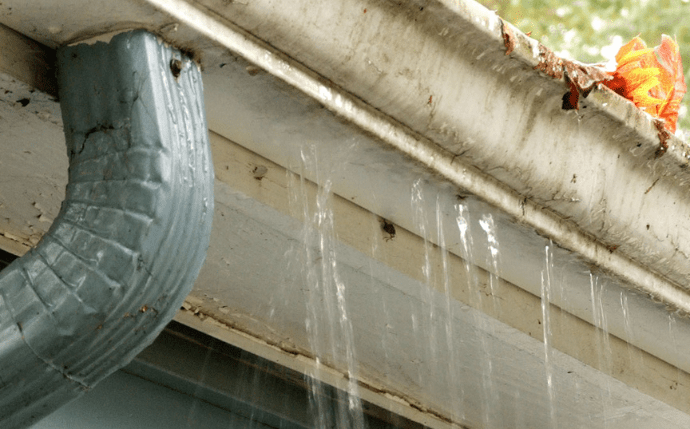

Gutters rarely get much attention until they fail at the worst possible moment, usually during a hard rain when water starts pouring over the edge of the roof, splashing against the siding, and pooling near the foundation. In Hackettstown, that moment often comes after a season of steady rain, falling leaves, winter ice, or a storm that pushed an already stressed system past its limit. By then, what looked like a small maintenance issue can turn into fascia rot, basement moisture, landscape erosion, or staining on brick and vinyl.
Homeowners often assume gutters either work or they do not, but most gutter problems build slowly. A seam opens a little more each month. A section sags just enough to hold water. A downspout clogs, overflows in one corner, and starts to wash out mulch. None of those issues feels urgent on day one. After a year or two, they become expensive.
That is why paying attention to early warning signs matters. When I look at homes needing Gutter Repair Hackettstown services, the same patterns show up again and again. The clues are visible if you know where to look, and catching them early usually means a simpler repair, not a full replacement.
When a small gutter problem stops being small
A gutter system does one deceptively simple job. It collects roof runoff and moves it away from the house in a controlled way. When any part of that path breaks down, water goes where it should not. That can affect the roof edge, soffits, siding, windows, exterior doors, planting beds, walkways, and the foundation.
Hackettstown homes face a mix of conditions that make gutters work hard. Mature trees drop leaves, seed pods, and twigs. Winter brings freeze and thaw cycles that loosen fasteners and create ice buildup. Spring and summer storms dump water fast enough to expose pitch problems or undersized downspouts. Older homes can also have fascia boards that have softened over time, which means the gutter may no longer have solid backing.
The result is that a gutter issue is rarely just a gutter issue. It is a water management issue, and water is patient. It will find the weak spot every time.
The signs that deserve your attention
Some warning signs are obvious from the street. Others show up around windows, flower beds, or even in the basement. If you notice any of the following, it is time to take a closer look.
- Water spilling over the gutter edge during rain
- Sagging, detached, or uneven gutter runs
- Peeling paint, rust, or orange streaks on the gutter or fascia
- Pools of water near the foundation after storms
- Cracks, separated seams, or loose downspouts
Each of those points can have more than one cause, which is why diagnosis matters. Overflow, for example, may come from a simple clog, but it can also point to improper slope, a crushed section, poor outlet placement, or a system that cannot handle the roof area above it. The right repair depends on what is actually happening.
Overflow during rain is one of the clearest red flags
If you can stand outside during a moderate or heavy rain and watch water sheet over the front edge of the gutter, something is wrong. Gutters are designed to capture a large volume of runoff quickly. If they fail that basic test, they are already underperforming.
Clogs are the most common cause. Leaves, shingle grit, pine needles, and roof debris tend to collect in low spots and at downspout outlets. Water hits that blockage, backs up, and spills over. On a single-story ranch, this is often easy to spot and fix early. On a taller home, homeowners may not notice until the overflow starts staining siding or washing trenches in the mulch below.
But clogs are only part of the story. I have seen many systems that were technically clean yet still overflowed because the pitch was off by just enough to slow drainage. Water does not need much slope, but it does need consistency. A slight rise in the middle of a long gutter run can create standing water that attracts debris and reduces capacity.
There is also the issue of roof valleys. A valley concentrates runoff into one section of gutter. If that section is too narrow, poorly supported, or placed under a steep roof plane, water can overshoot the gutter in hard storms. In those cases, cleaning alone does not solve the problem. The repair may involve reinforcing the run, adjusting the pitch, or redesigning that section to handle the water load more effectively.
Sagging gutters usually mean more than loose hardware
A gutter should look straight, secure, and aligned with the roofline. If it bows in the middle, dips at one end, or appears to pull away from the fascia, that is not just a cosmetic issue. Sagging changes how water flows and often leads to standing water, which adds more weight and more strain. It becomes a cycle.
In Hackettstown, winter often plays a role here. Snow sitting on the roof can slide into the gutter. Ice can form in clogged sections and stay there for days. That repeated load loosens spikes, pulls hangers, and sometimes damages the fascia board itself. By spring, the gutter is no longer firmly attached.
This is one place where judgment matters. If the metal is still in good shape and the fascia behind it is sound, a repair can be straightforward. Rehanging the gutter with modern hidden hangers, correcting the pitch, and sealing vulnerable joints may restore the system well. If the wood backing is rotted, however, the gutter cannot be properly secured until the fascia is repaired or replaced. Skipping that step is a temporary patch at best.
A homeowner once described a gutter as “just a little wavy” along the back of the house. Up close, the middle section held almost an inch of standing water even three days after rain. The hangers had loosened, the seam had started leaking, and the fascia was soft behind one bracket. From the yard it looked minor. From a ladder it was already causing damage.
Seams, joints, and corners often fail first
Sectional gutters have connection points, and connection points are where problems usually begin. Expansion and contraction from hot summers and freezing winters slowly stress sealant and fasteners. Water tests every seam during every storm. Once a joint starts leaking, the damage tends to spread outward.
Corner miters are especially vulnerable. They handle a lot of flow, collect debris, and sit at a spot where movement shows up quickly. If you notice drips from corners long after rain should have drained away, or dark streaks beneath them, that is usually a sign the seal has failed. Sealing a seam can be a valid repair when the surrounding metal is still structurally sound. If the joint has twisted, separated, or corroded significantly, the section may need to be rebuilt or replaced.
Downspout connections are another trouble spot. A loose elbow or disconnected drop outlet can send gallons of water right against the wall. Sometimes homeowners hear this before they see it, a hollow pounding inside the downspout, followed by splashing at the base. That sound often points to a partial blockage or a loose fitting that is no longer directing water cleanly downward.
Peeling paint and rust tell a story about chronic moisture
Fresh paint does not peel off a house for no reason. If the trim behind the gutter is blistering, if fascia boards are discolored, or if rust streaks run down the face of the gutter, moisture has likely been sitting where it should not. These are the kinds of signs people dismiss because they build gradually, but they often indicate a problem that has been active for months.
Aluminum gutters do not rust, but the screws, brackets, and nearby metal components can corrode. Steel gutters, of course, can rust through. Once metal starts to pit or flake, the repair options narrow. A tiny rust spot can sometimes be treated if caught early. A soft, perforated section generally cannot be trusted through another season of heavy weather.
Paint failure on fascia boards deserves special attention because it may mean water is running behind the gutter rather than into it. That can happen when the gutter is set too low, when flashing is missing or tucked improperly, or when a roof edge detail sends water backward during wind-driven rain. People often assume the gutter itself is defective when the deeper issue lies in how the roof edge and gutter interact.
Water near the foundation is never something to ignore
One of the main reasons to repair gutters promptly is to protect the foundation. If you see puddles near the house after a storm, or notice channels cut through mulch beds, the drainage system is not moving water far enough away. Sometimes the gutter is leaking. Sometimes the downspout is too short or disconnected. Sometimes the volume of overflow is simply overwhelming the area below.
In a place like Hackettstown, where homes range from older properties with established grading patterns to newer developments with tighter lot layouts, drainage behavior can vary a lot from one yard to the next. A house built into a slope can be especially sensitive. One failing downspout on the uphill side may contribute to basement dampness or crawl space moisture faster than most owners expect.
Foundation concerns do not always announce themselves dramatically. More often, you Gutter Repair Hackettstown see subtle signs first. A musty smell after rain. Efflorescence on basement walls. Soil that stays damp long after neighboring ground dries out. If gutter water is repeatedly discharged too close to the house, the repair should address both the gutter and the water’s final path away from the structure.
Gutter damage can show up inside the house
This surprises people, but some gutter failures reveal themselves indoors before the exterior issue becomes obvious. Water intrusion near windows, stains at ceiling edges, or dampness in an upper corner room can sometimes be tied to clogged or overflowing gutters. When water backs up at the roof edge, it can work into places it was never meant to reach.
Ice makes this worse. A clogged gutter in winter can trap meltwater, which then refreezes and forms a barrier. Water behind that barrier may wick under shingles and into the roof deck. By the time a stain appears inside, the gutter problem has already moved beyond simple cleanup.
Not every interior stain is caused by gutters, of course. Roofing, flashing, masonry, and ventilation issues can mimic one another. Still, when I see an interior moisture mark near an exterior corner, I always want to inspect the gutter above it. That connection is common enough that it should never be overlooked.
The season matters, but the warning signs are year-round
Spring is when many gutter failures become visible. Winter has done its damage, spring rain exposes leaks and overflow, and fresh landscaping makes erosion easy to spot. Summer can hide some issues because storms may be less frequent, but it is also a good time for repairs because materials are dry and access is easier.
Fall is deceptive. Homeowners often think they can wait until leaves are fully down before dealing with gutters, but if the system is already loose Gutter Repair Hackettstown or leaking, autumn debris only accelerates the problem. Winter is the toughest season for neglected gutters. Water trapped in low spots freezes, expands, and widens every weakness.
The practical lesson is simple. Do not wait for a perfect season if the signs are already there. The right repair at the right time is usually cheaper than the repair that follows a season of delay.
Repair or replacement depends on the pattern of failure
Not every damaged gutter needs to be replaced. This is where experience matters more than guesswork. A solid system with isolated issues often responds well to repair. That might include resecuring loose runs, resealing seams, replacing hangers, adjusting pitch, clearing blockages, or reconnecting downspouts.
A full replacement makes more sense when the problems are widespread. If multiple sections are rusting through, if the profile is badly warped, if seams have failed in several places, or if the fascia behind long stretches is compromised, repair costs can add up without delivering long-term reliability.
Age matters, but condition matters more. I have seen older gutters that were worth saving because they were heavy-gauge, well-installed, and only needed targeted work. I have also seen relatively young systems that had to be replaced because the original installation was poor from the start. Cheap hangers, inconsistent pitch, undersized downspouts, and weak corners can cause recurring trouble no matter how new the material is.
For homeowners searching for Gutter Repair Hackettstown help, the useful question is not “Can this be patched today?” It is “What will keep this water moving properly for the next several seasons?”
What a careful inspection usually includes
A good gutter inspection is not just a glance from the driveway. It should look at the full water path, from the roof edge to the discharge point on the ground. That means checking for debris, standing water, loose fasteners, failing sealant, damaged fascia, misalignment, and signs of water staining on the siding and below-grade areas.
A technician should also pay attention to context. Is there a steep roof valley above the trouble spot? Are nearby trees constantly filling one section with debris? Is one downspout expected to handle too much roof area? Has splashback stained masonry or loosened mulch beds below? Those details shape the repair strategy.
Here are a few practical steps homeowners can take before scheduling work or while deciding how urgent the issue is:
- Watch the gutters during an actual rain if it is safe to do so
- Look for puddling near the foundation within a few hours after a storm
- Check whether downspouts discharge far enough away from the house
- Inspect for visible sagging, joint separation, or peeling trim paint
- Note any basement dampness or exterior staining that appears after rain
That simple observation often tells more than a dry-weather inspection alone. A gutter can look acceptable in sunshine and fail badly under real water load.
Some edge cases homeowners miss
There are a few situations that do not fit the usual pattern. One is when the gutter itself is fine, but the downspout outlet underground is blocked. In that case, the system backs up from below, and the overflow appears to be a gutter issue when the real problem is in the buried drainage line.
Another is when gutter guards create a false sense of security. Guards can reduce large debris buildup, but they do not make a system maintenance-free. Fine shingle grit, maple seeds, and pine needles still find their way in. Some guards also change how water enters the gutter, which can be a problem under heavy runoff if the product is not well suited to the roof and tree conditions.
I also see cases where repeated ladder damage has bent the front lip of the gutter. That distortion can interfere with flow and create weak points at hangers or seams. It is easy to overlook because it appears minor, but the shape of the gutter matters. Water follows edges, and deformed edges do not behave the way they should.
Why prompt repair pays off
The cost of gutter repair is usually modest compared with the damage uncontrolled water can create. Repairing a seam, reattaching a downspout, or correcting slope is one category of expense. Replacing rotted fascia, repainting stained trim, addressing basement moisture, or repairing landscape washout is another.
More important, prompt repair gives you options. When damage is caught early, you can often preserve the existing system and improve performance with targeted work. When problems are ignored, small defects combine. The gutter loosens, the fascia softens, water reaches the soffit, paint fails, and now the repair involves multiple trades instead of one.
For homeowners in Hackettstown, the smartest approach is straightforward. Treat unusual water behavior as a warning, not an annoyance. If the gutters overflow, sag, leak at seams, stain the trim, or leave puddles around the foundation, do not assume it will resolve on its own. A properly functioning gutter system is one of the house’s quiet essentials. You barely notice it when it works, but you pay for it when it does not.
Just Gutters LLC
Address: 262 Main St, Hackettstown, NJ 07840
Phone number: +12013319454
FAQ About Gutter Repair Hackettstown
What is the average cost to repair gutters?
The average cost to repair gutters is about $390, with most jobs ranging from $120 to $900 depending on the damage. You can explore detailed data and estimates on Angi.
Can I repair a gutter myself?
Yes, you can easily repair most common gutter problems yourself if you are comfortable working on a ladder.
How much does it cost to repair a leaking gutter?
The average cost to repair a leaking gutter ranges from $75 to $350. Most homeowners spend around $150 to $250 to hire a professional to patch small holes or reseal leaking joints. If the damage is severe and requires replacing entire sections, the price can increase from $300 to $800.